Environments Are Not Neutral: Biology, Burnout, and the Design of Work with Dr. Elizabeth C. Nelson


About
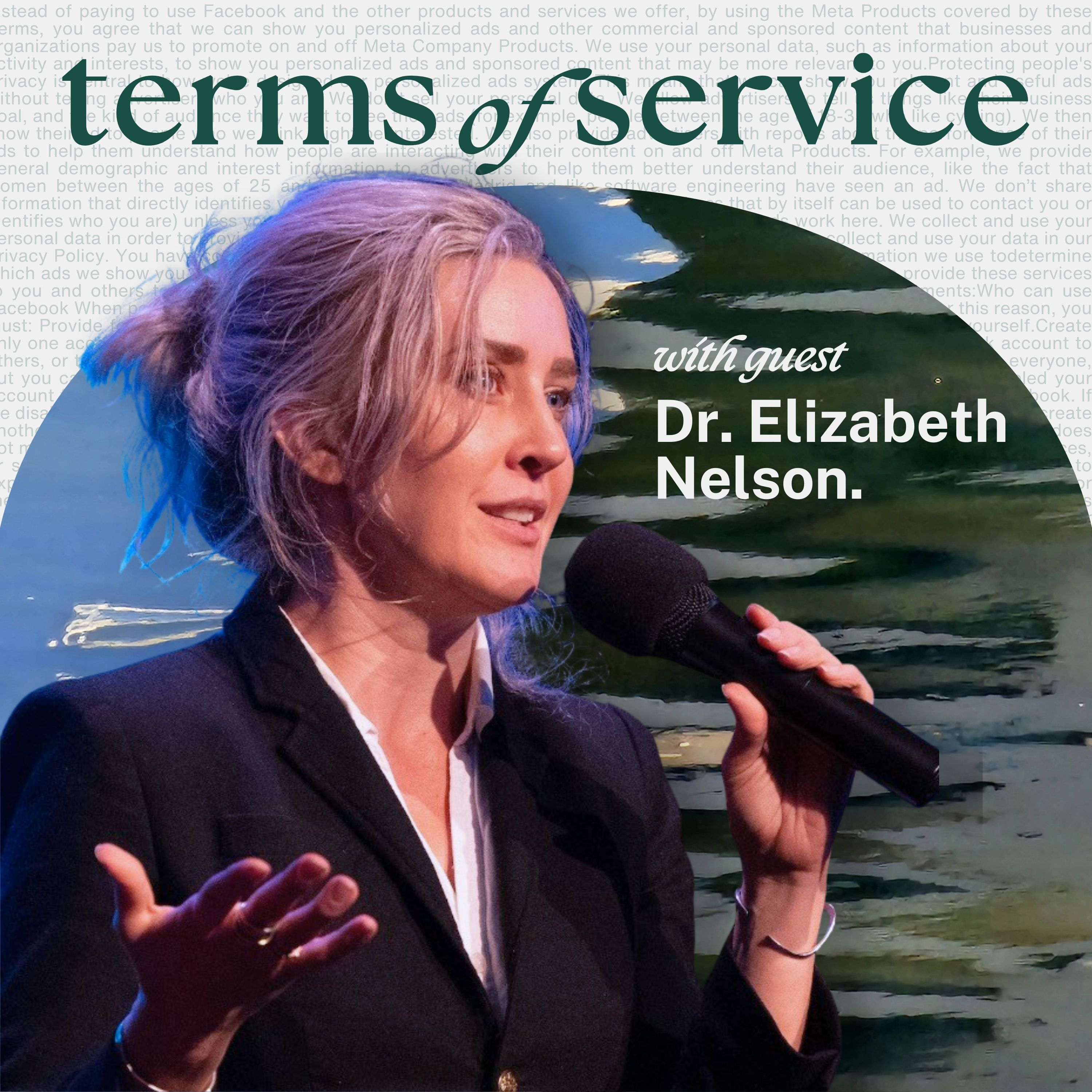
In this episode of Terms of Service, host Mary Camacho speaks with Dr. Elizabeth C. Nelson, biomedical engineer and founder of Learn, Adapt, Build, about a deceptively simple idea: environments are not neutral. From open office layouts to wearable wellness metrics, the spaces and systems we design encode assumptions about who they are built for—and who must adapt to survive inside them.
Drawing from her own burnout experience and years of research bridging academia and practice, Elizabeth explains how modern workplaces often optimize for the most resilient minority rather than the majority. They explore how environmental design affects stress, cognition, sleep, and performance; why high performers are often the first to hit the wall; and how leadership teams can make practical, measurable changes that improve both well-being and output.
This conversation extends this season’s focus on health technology governance into the physical workplace itself — asking how environmental measurement, workplace design, and performance metrics can either support human thriving or quietly optimize for institutional control.
Key Takeaways
- Environments are not neutral. Physical layout, lighting, noise, air quality, and collaboration norms encode assumptions about the “default worker.”
- We do not design for the average. Many workplaces are optimized for the most resilient employees, not the most sensitive—despite evidence that designing for the sensitive improves outcomes for everyone.
- Focus is biologically powerful. Deep work and flow states (often lasting 60–90 minutes) support cognitive performance and emotional regulation. Constant interruption erodes both.
- Burnout is not a binary. It develops over time and often affects high performers who overextend without adequate recovery.
- Measurement can validate—or destabilize. Environmental sensors and wearables can reconnect people to their bodies, but poorly framed metrics can create shame or disconnect (as seen in early 10,000-step tracking experiences).
- Small structural changes matter. Separating deep-focus roles from interruption-heavy roles, improving air quality transparency, and removing unnecessary management friction can significantly improve performance and morale.
Topics Covered / Timestamped Sections
- 00:00 – Season framing: architecture, wellness technology, and why environments matter
- 04:00 – Burnout as origin story and the shift from academia to workplace research
- 06:00 – Open offices, evolutionary biology, and why protection and cover matter
- 12:00 – The cultural loss of focus and the cost of constant collaboration
- 19:00 – Burnout as a gray zone and the biological role of sleep
- 22:00 – Wearables, recalibrating step goals, and the psychology of measurement
- 27:00 – Air quality sensors, transparency, and the “Butterfly Air” example
- 33:00 – Designing for the most sensitive rather than the most resilient
- 49:00 – Case study: separating engineers from interruption-driven roles
- 56:00 – Leading with biology: why design becomes easier when aligned with human instincts
Guest Bio and Links
Dr. Elizabeth C. Nelson is a biomedical engineer, researcher, and founder of Learn, Adapt, Build. Her work bridges scientific research and real-world application, focusing on workplace design, burnout prevention, environmental measurement, and biological alignment. She advises leadership teams and organizations on how to create spaces that support focus, recovery, and sustainable performance.
- Website: https://learnadaptbuild.com
- LinkedIn: https://www.linkedin.com/in/drelizabethnelson/
- Book: The Healthy Office Revolution
Resources Mentioned
- The Healthy Office Revolution by Dr. Elizabeth C. Nelson
- Atomic Habits (referenced in discussion about incremental change)
- Smart Building Collective (Elizabeth’s professional affiliation)
- Workplace environmental testing (CO₂, air quality, light disturbance measurement)
Call to Action
If environments are not neutral, then design is a form of leadership. What assumptions are encoded in your workplace—or in the technologies you use every day? This episode invites you to rethink performance, burnout, and biology through the lens of space itself.
🎧 Listen now: https://termsofservice.xyz/
Credits
Host: Mary Camacho
Guest: Dr. Elizabeth C. Nelson
Produced by Terms of Service Podcast
Sound Design: Arthur Vincent and Sonor Lab
Co-Producers: Nicole Klau Ibarra & Mary Camacho